Designing Cost Effective Rainscreen Facades with HPL
Introduction & Material Fundamentals
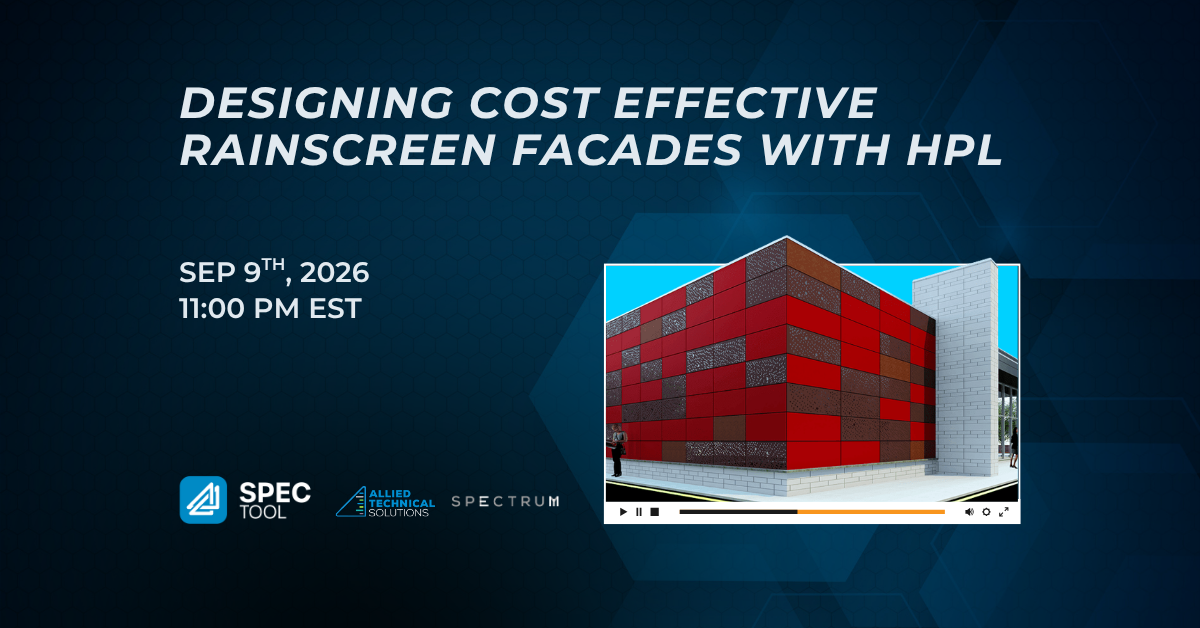
- High-Pressure Laminate (HPL) panels consist of wood fibers and craft paper impregnated with resin, containing zero plastic and no silica.
- Modern HPL manufacturing uses Electron Beam Curing (EBC) to bond the decorative surface to the core at a molecular level, providing extreme scratch, UV, and graffiti resistance.
- While upfront material costs for HPL can be higher than alternatives like fiber cement, the total cost of ownership drops significantly over time due to minimal maintenance needs.
Rainscreen Systems & Fire Performance
- A rainscreen requires an outer layer, an inner layer, and a continuous air cavity to create a “chimney effect” for moisture management and thermal efficiency.
- HPL is technically combustible (Class A flame spread), so system designs specify non-combustible mineral wool insulation to meet NFPA 285 standards.
- Proper ventilation cavity clearances (e.g., 1 inch above sidewalks, 6 inches above mulch) must be maintained to keep the bottom air inlets clear.
Cost-Optimization Strategies & Fixing Methods
- Fixing options range in cost and installation complexity, including exposed fasteners, hidden/concealed clips, module systems (e.g., Unity), and structural adhesive systems (Bond).
- Using adjustable thermally broken (ATB) sub-framing clips can reduce labor costs by eliminating the need to shim girts on-site.
- Optimizing panel cutting dimensions and choosing standardized sheet sizes can raise yield efficiency to nearly 90% while cutting substructure costs dramatically.