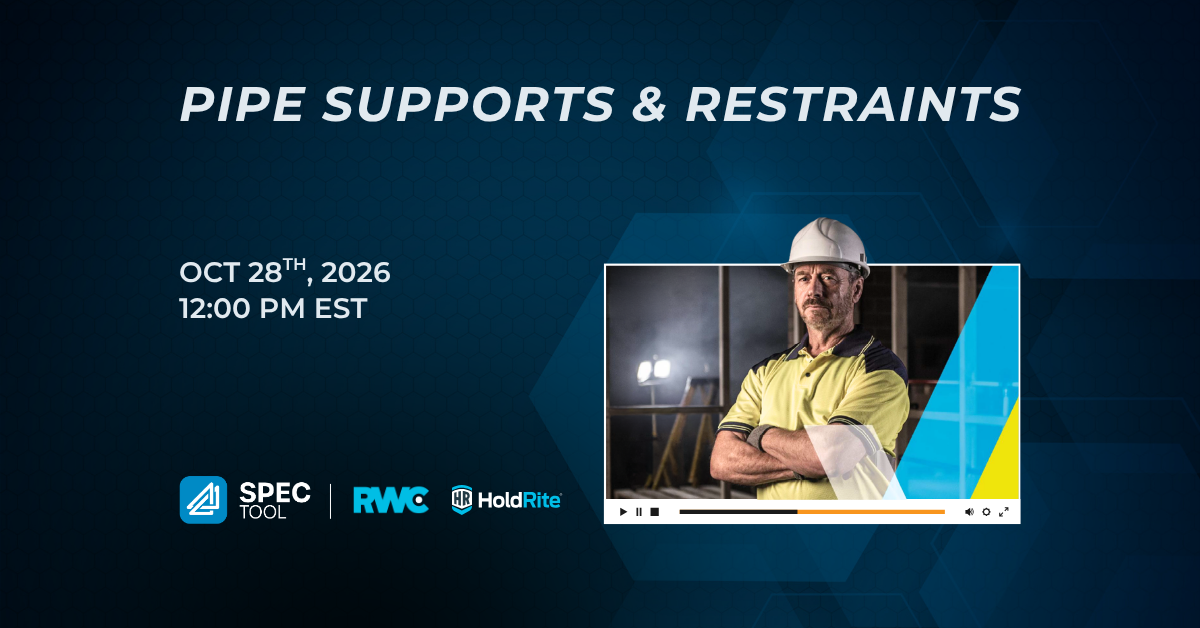
Pipe Supports & Restraints with RWC
Chapter 1: Introduction and the Pitfalls of Field-Devised Methods
Vague Specifications Cause Makeshift Work: Catch-all spec language like “workmanship-like manner” gives contractors little guidance and actively encourages makeshift, field-devised methods.
Hidden Costs and Labor: Contractors assume site-fabricated wood or strut supports save money, but measuring, cutting, and shaping scrap materials takes 8 to 10 minutes per piece versus under one minute for purpose-made brackets.
Compliance and Safety Risks: Makeshift supports introduce risks such as combustible scrap wood behind walls, improper load support (such as hanging water heaters from plastic pans), and failed building inspections.
Chapter 2: Eliminating Field Methods via Engineered Solutions & Master Specs
Tightening Spec Language: Master specifications should explicitly require all support materials to be new, manufactured specifically for pipe/equipment support, and prohibit makeshift field methods.
Consistent Quality and Aesthetics: Engineered solutions deliver clean, reliable, and uniform results across an entire installation, fully meeting plumbing code and manufacturer intent.
Manufacturer Collaboration: Specifiers are encouraged to consult manufacturers and subject matter experts for guidance and vetted model verbiage to mitigate liability and frivolous claims.
Chapter 3: Primary Overhead, In-Wall, and Restraint Standards
Overhead Support Standards: Primary overhead hangers and supports must adhere to established industry baselines from ANSI and the Manufacturers Standardization Society (MSS SP-58, SP-69, and ANSI 89).
In-Wall Code Adherence: Governed by the IPC, UPC, and IAPMO, in-wall piping must be properly aligned and braced to prevent sagging using approved materials, rather than relying on cut corners hidden by drywall.
Cast Iron Soil Pipe Mandates: Modern plumbing codes (such as CISPI 301-21, IPC, and UPC) mandate that horizontal hubless cast iron piping 4 to 5 inches and larger must be braced against joint separation at every branch, opening, or change of direction.
Chapter 4: Thrust Forces and Engineered Restraints (HoldRite 117 Series)
Real-World Thrust Exceeds Head Testing: Hubless couplings are tested to 10 feet of head pressure, but heavy rainstorms, forced pump discharge, or stack clogs generate thrust forces that cause catastrophic system failures.
High-Profile System Failures: Real-world failures at major venues (such as Lucas Oil Stadium, Rogers Place, and Philadelphia) demonstrated that improper field bracing or unbraced fittings detach completely under load.
Engineered HoldRite 117 Capabilities: Purpose-built HoldRite 117 restraints are load-tested to hold up to 50 feet of head pressure, fitting components from 2 to 15 inches across all standard fitting configurations to keep lines intact.
Chapter 5: Specifying Solutions via ATSpec Tool & Workflow Integration
Centralized Selection Software: ATS provides a free online platform aggregating roughly 45 plumbing and mechanical manufacturers, allowing engineers to quickly locate and properly configure engineered products.
Masters and Automated Updates: Firms can create Master specification templates for repeat building types, receiving automated push alerts if products, model numbers, or standards change.
Multi-Format Spec Generation: The tool exports complete packages, including 3-part CSI Word specifications, Excel schedules, manufacturer submittals, and Revit/BIM files, for seamless integration into design standards.